Case study
Gillnet: From n8n Workflow to Multi-Tenant AI Product
How DitchNow helped build Gillnet into an AI product with Slack App, Web App, human-in-the-loop design, and EU AI Act & GDPR-compliant sourcing tool.
View case studyStrategy notes, product ops playbooks, and AI delivery lessons straight from the DitchNow studio. Fresh ideas, built for shipping.
Notes from the studio

Nov 1, 2026
You fix the checkout total. The discount stops working. You repair the discount, and an old customer can no longer open an invoice. After a few rounds, you are afraid to touch an app you built yourself.

Nov 1, 2026
Moving an app is more than moving its website You built an application with Lovable and now want greater control over hosting, infrastructure, or development. Perhaps you want another engineer to maintain it using conventional tools. The natural question is whether you can move everything without making customers create new accounts, losing their data, or interrupting the business.

Nov 1, 2026
Your Google account connects perfectly. Other accounts don't. You built an application that connects to Google Drive, Gmail, or Calendar. You tested it with your own Google account, and everything worked. Then customers tried connecting their accounts. Some receive an access error, others see a warning about an unverified application, and some connect successfully only to discover that the integration stops working later.

Nov 1, 2026
Your app was fast with five users. Now it's struggling with fifty. You built your application with Lovable, Bolt, Replit, or another AI coding tool. During development, pages loaded quickly and everything felt responsive. Then real customers arrived. Dashboards started taking several seconds to open, searches became sluggish, and occasionally the app stopped responding altogether.

Nov 1, 2026
Preview and production are not always the same environment You build an application in Lovable, test it in the editor, and everything appears to work. Then you publish it, share the link, and discover that customers cannot log in, certain pages show errors, or important features stop responding. The immediate temptation is to ask AI to fix the code. But what if the code itself is not the problem?

Nov 1, 2026
Receiving payment and granting access are separate operations A customer signs up for your premium plan, enters their payment details, and completes checkout. They return to your application expecting access, but the premium features remain locked. They contact support, perhaps attaching a payment confirmation. Now you have an uncomfortable situation: the customer believes they paid, but your product behaves as though they did not.

Nov 1, 2026
Giving everyone an AI account isn't the same as changing how work gets done. Your company has purchased AI tools for employees. Everyone has access, several people attended a demonstration, and management expects productivity to improve. But after the initial enthusiasm, most work still happens exactly as before. Employees occasionally ask AI to rewrite an email or summarize a document, yet important business processes remain unchanged.

Nov 1, 2026
Your app works. But can another developer take it over? You built an application using Lovable, Bolt, Replit, Cursor, or another AI coding tool. It has real users, useful features, and perhaps paying customers. But development is becoming increasingly difficult. Every new request seems to require changes across several unrelated parts of the app. You start wondering whether the entire project needs rebuilding.

Nov 1, 2026
Not every business process needs an AI agent You want to automate a recurring business task. Someone suggests building an AI agent that can reason, make decisions, and operate several tools. It sounds promising, especially when modern AI coding platforms make such systems appear easy to create. But before building one, there is a more important question: does the process actually require that level of flexibility?

Nov 1, 2026
The app says the email was sent. The customer sees nothing. A new customer signs up for your application and waits for their confirmation email. Nothing arrives. Another customer requests a password reset and experiences the same problem. Your application may display a success message, yet neither user can complete the process. Before changing the login system, you need to find out whether the email was generated, accepted, delivered, or blocked.

Nov 1, 2026
Your documents changed. Your assistant didn't. Your company has an AI assistant that answers questions from internal policies, product documentation, or customer support materials. Someone updates an important document, but days later the assistant continues quoting the old information. Team members begin questioning whether they can trust its answers.

Oct 31, 2026
A practical handover covers account ownership, connections, alerts, and a rehearsal by the person who will operate the workflow.

Oct 31, 2026
Check the dependencies, lost work, and recovery steps behind a green backup indicator with an isolated restore rehearsal.

Oct 31, 2026
Use real customer conditions to separate extraction, retrieval, and answer failures, then define when the feature should ask for help.

Oct 31, 2026
Calculate the complete task cost and redesign the review process around useful results, exceptions, and clear responsibility.

Oct 31, 2026
Use a team-invitation example to uncover hidden requirements, agree on completion criteria, and reduce feature scope sensibly.

Oct 31, 2026
Define organization boundaries and the customer lifecycle before turning a useful internal tool into a product for multiple businesses.

Oct 31, 2026
Find the expensive paths in your AI product and calculate the cost of a result customers can actually use.

Oct 31, 2026
Two customers can sign in successfully and still have access to each other's information. A login proves who someone is. Your app must separately decide what that person is allowed to read, change, download, or delete.

Oct 31, 2026
Follow the event trail before replaying a failed action. Learn why retries happen and what a reliable duplicate-prevention fix needs to prove.

Sep 15, 2026
There is a temptation when building an AI product to start with the final architecture.

Aug 4, 2026
AI can turn an idea into working software at extraordinary speed. It still cannot own the users, trade-offs and consequences that define a successful product.

Jun 7, 2026
Vibe coding can help you build an app. Building a dependable SaaS company still requires product judgment, engineering decisions and operational ownership.
May 24, 2026
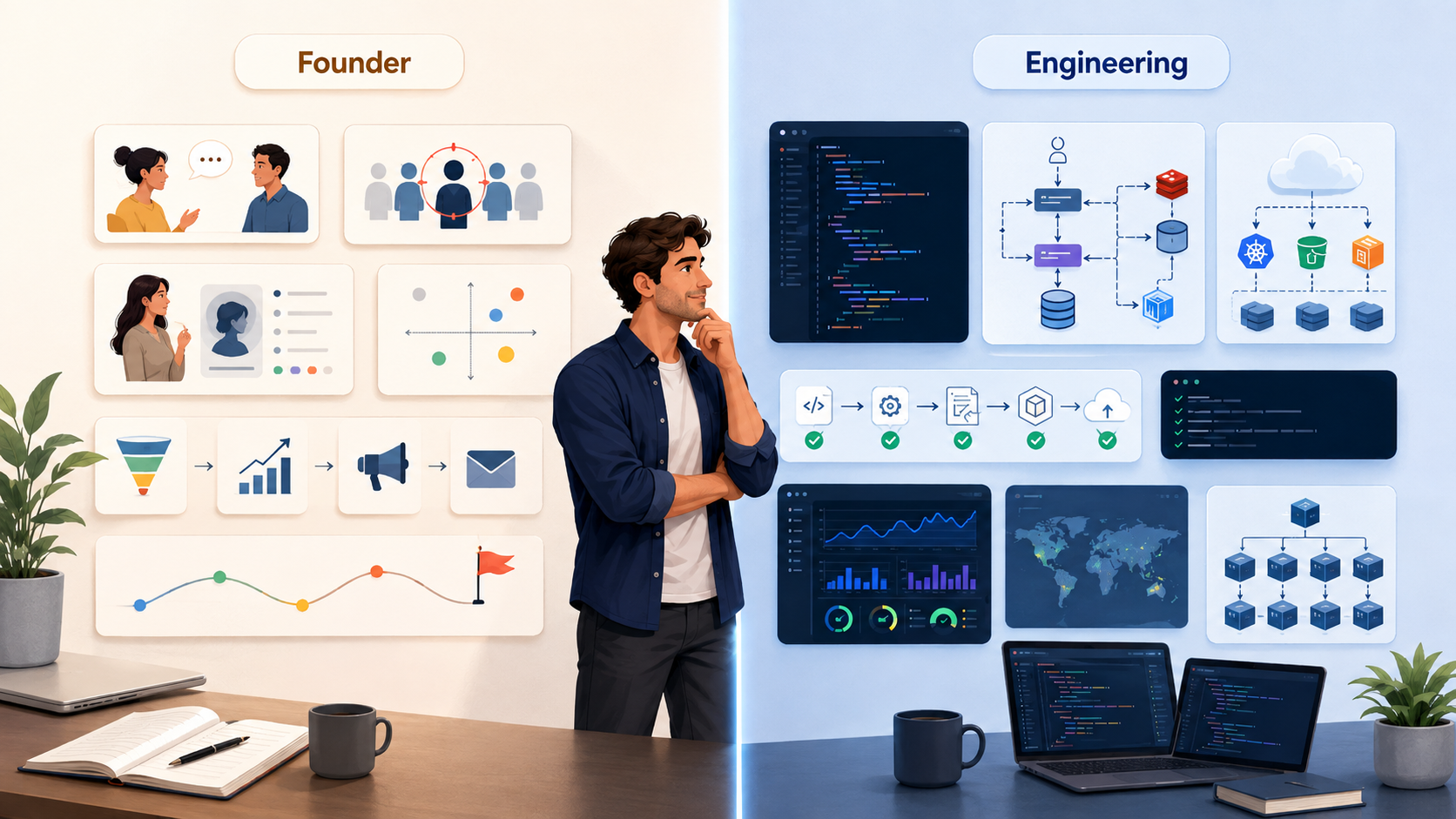
What solo founders should really focus on before turning a fast prototype into a serious software company
Mar 1, 2026
DitchNow is an AI product studio for solo founders and small teams who want to ship real products, not just prototypes and pitch decks.